
Industrial Battery Systems
Vented and valve-regulated NiCd, vented and valve-regulated lead-acid, and lithium LiFePO4 battery systems selected according to autonomy, operating environment, service life and application requirements.
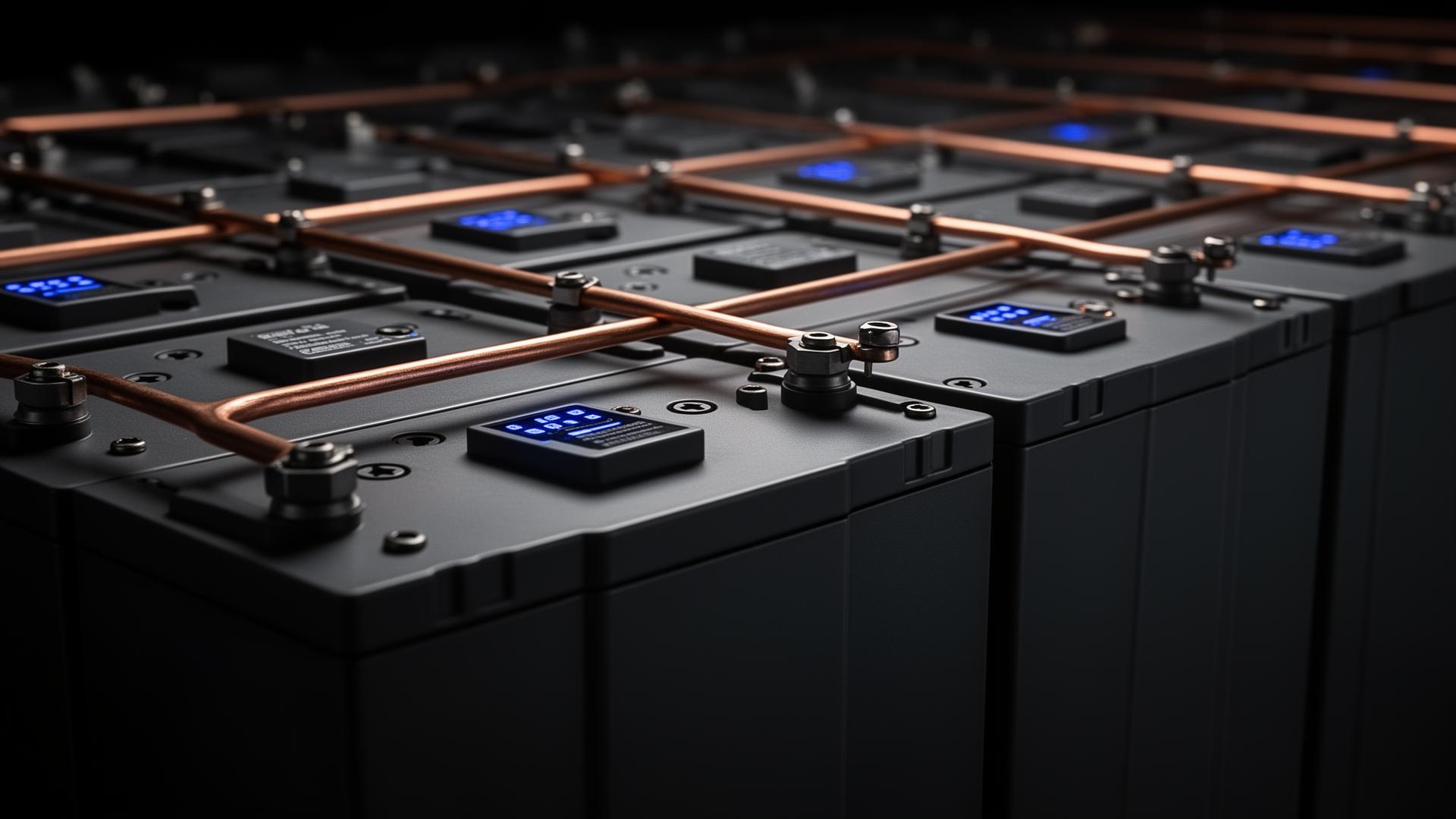
The right chemistry for the duty, the site and the service life.
Battery selection is the single largest influence on standby system reliability and lifecycle cost. We supply and support vented and valve-regulated nickel-cadmium, vented and valve-regulated lead-acid, and lithium LiFePO4 systems, with sizing carried out to recognised standards.
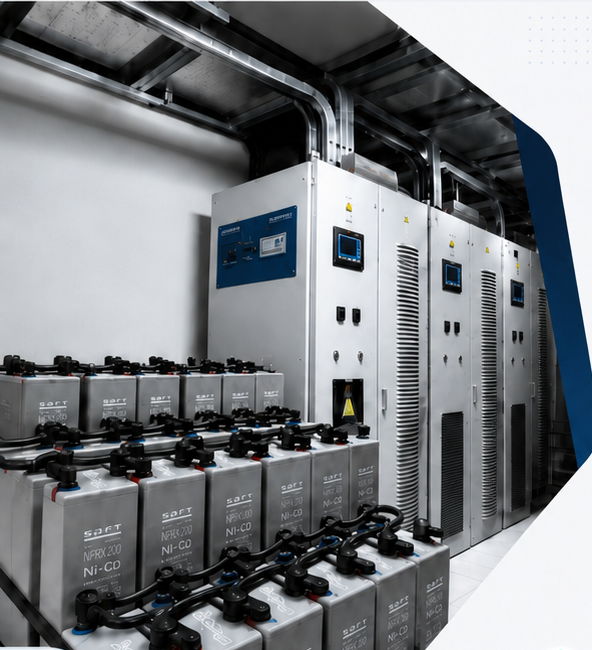
Battery types supplied and supported.
Chemistry and construction are selected for the discharge duty, ambient conditions, maintenance access and expected service life of each stationary standby power installation.
NiCd — vented
Long service life, high tolerance to temperature extremes, deep discharge and electrical abuse. Suited to substation, rail and remote installations.
NiCd — valve regulated
Reduced maintenance and topping-up requirements while retaining the robustness of nickel-cadmium chemistry in confined installations.
Lead-acid — vented
Established, cost-effective chemistry for controlled environments where regular maintenance and ventilation are available.
Lead-acid — valve regulated
Sealed construction for cabinets and rooms with limited ventilation, where maintenance access is restricted.
Lithium LiFePO4
High energy density, high cycle life and low mass, with integrated battery management for monitoring and protection.
How a battery system is specified.
Sizing follows IEEE and IEC methods and accounts for ageing, temperature and design margin, so the bank still meets its duty at end of life.
- Load profile
- Constant power, constant current or pulse duty over the required autonomy
- Autonomy
- Backup duration and end-of-discharge voltage limits of the connected equipment
- Ambient temperature
- Design temperature and derating applied to capacity and service life
- Standards
- Sizing to IEEE and IEC methods, including ageing and design margin factors
- Installation
- Rack or cabinet arrangement, ventilation, seismic and access requirements
- Maintenance regime
- Available maintenance access and preferred vented or valve-regulated design
What well-specified banks deliver.
Correctly sized industrial battery banks provide predictable autonomy, stable terminal voltage and serviceable lifecycle performance under the actual operating conditions of the site.
- Extended service life and low lifecycle cost
- Wide operating temperature range, including high-temperature duty
- High-power options for short, heavy discharge duty
- Predictable performance with minimal maintenance
- Wide capacity range across rack and cabinet arrangements
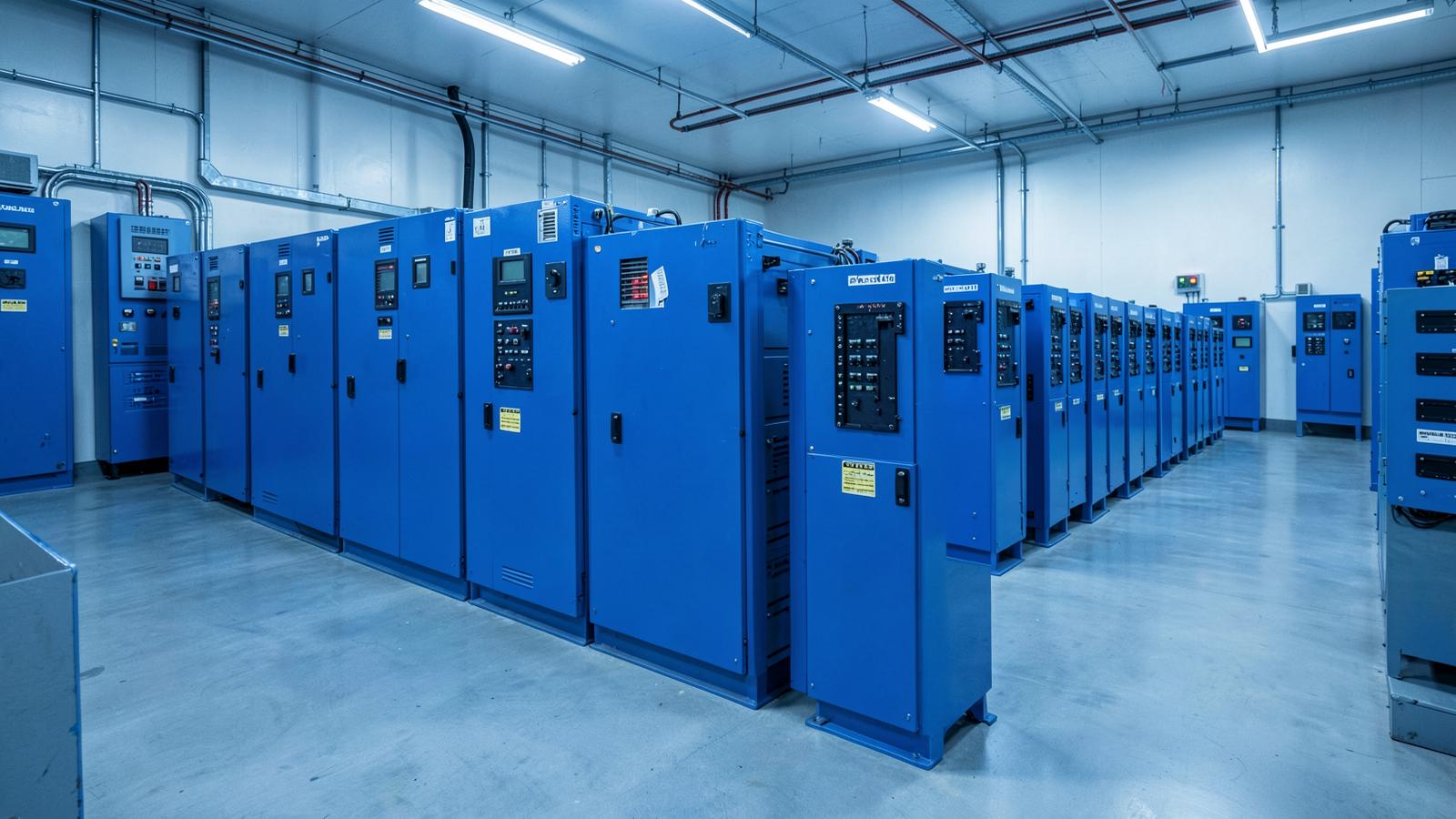
Local assembly, maintenance and responsible disposal.
Industrial battery banks require planned inspection, capacity testing and controlled handling at end of life. Static Power provides local assembly, maintenance support, replacement planning and responsible recycling for NiCd and lead-acid systems.
Local assembly and support
Battery assembly, rack build and technical support delivered locally with regional stock holding.
Maintenance contracts
Scheduled inspection, voltage and connection checks, topping-up and condition reporting.
Discharge testing
Capacity and discharge testing to confirm remaining service life and inform replacement planning.
Disposal and recycling
Collection and recycling of industrial NiCd and lead-acid batteries through established channels.